The Most Underaddressed Gut Issue: Low Stomach Acid
Ever feel bloated, heavy, or sluggish after eating?
You’ve probably heard of too much stomach acid, that burning, reflux-type feeling after a big meal.
But here’s the truth most women never hear: too little stomach acid can cause just as many problems… and often flies under the radar.
Stomach acid isn’t the enemy, it’s your digestive spark. It helps you break down protein, absorb key minerals, and protect your gut from unwanted bacteria.
When levels dip too low, digestion slows and ripple effects can show up as bloating, fatigue, food sensitivities, or even hormonal imbalance.
Let’s talk about what’s really going on.
What Is Low Stomach Acid or hypochlorhydria?
Stomach acid, often called gastric acid, plays a crucial role in the digestive process. Its primary component is hydrochloric acid (HCl), supported by smaller amounts of potassium chloride (KCl) and sodium chloride (NaCl).
In addition to these acids, the stomach releases a protective mucus layer that shields the stomach lining from the strong, corrosive fluids it produces. The mucus layer is very important because your stomach acid is a powerful fluid with a pH of 1–3. A pH level above 3 suggests hypochlorhydria or low stomach acid.
This acid:
Activates digestive enzymes
Breaks down protein into absorbable pieces
Helps you absorb minerals like iron and magnesium
Keeps harmful bacteria in check
When stomach acid levels are too low, food lingers in the stomach longer than it should, creating the perfect environment for unwanted bacteria to thrive. As this partially digested food moves into the intestines, it begins to ferment, which can lead to gas, bloating, and discomfort.
Because digestion isn’t happening efficiently, your body struggles to properly break down and absorb key nutrients — meaning proteins, vitamins, and minerals stay locked in the food instead of being used for energy, repair, and overall health
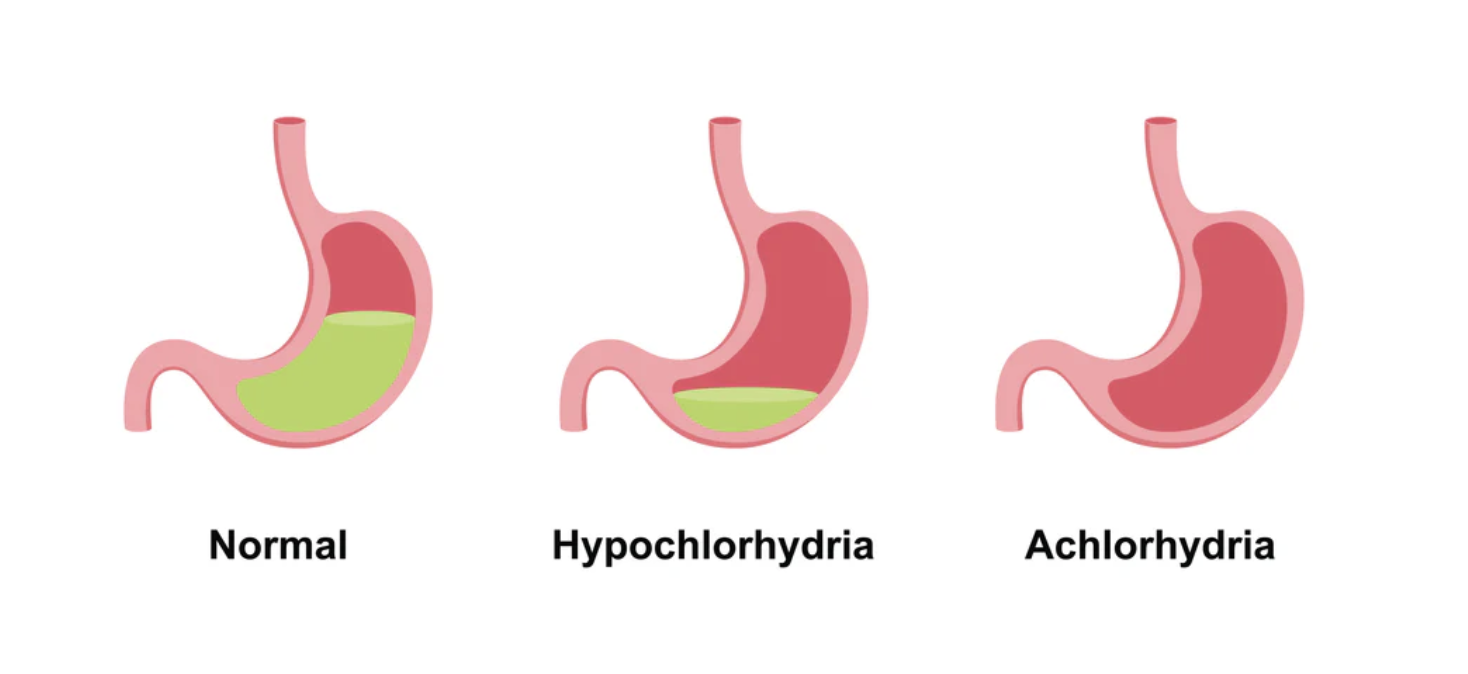
Effects of Hypochlorhydria
Stomach acid acts as a trigger for the digestive process to begin. Those with low stomach acid experience many symptoms related to poor digestion, such as gas, bloating, stomach cramps, and heartburn.
These symptoms are often a result of delayed gastric emptying — meaning food stays in the stomach longer than it should. Adequate acid is essential for signaling the pyloric sphincter, the small valve that opens to let food move from the stomach into the small intestine. When stomach acid is insufficient, that signal weakens, and the pyloric sphincter doesn’t open properly. As a result, digestion slows down, leaving food to sit and ferment in the stomach instead of moving smoothly through the digestive tract.
Low stomach acid can also lead to a protein deficiency, regardless of how much protein we’re eating. Protein is an important macronutrient for tissue growth and repair, enzymes, hormones, etc. Well, in order for us to digest protein properly and get the benefits, strong acid is required.
But protein isn’t the only nutrient dependent on stomach acid for digestion. Vitamins and minerals such as B6 and B12, iron, calcium, folic acid, and magnesium are also unable to extracted from food without sufficient stomach acid. Zinc and magnesium are involved in hundreds of biological process in the body. This is why those with unaddressed low stomach acid can experience issues unrelated to digestion such as fatigue, brittle hair and nails, and even brain fog.
Recurrent Infections and low stomach acid
Strong stomach acid is one of the body’s greatest natural immune defenses. It acts like a powerful gatekeeper, destroying harmful bacteria, parasites, and pathogens that enter through food or water before they ever reach the intestines. When stomach acid is low, this defense becomes weakened. These bacteria can survive and migrate deeper into the digestive tract — increasing the risk of gut infections, small intestinal bacterial overgrowth (SIBO), and recurrent imbalances. Over time, this bacterial overgrowth can damage the gut lining, disrupt nutrient absorption, and trigger inflammation that further stresses the immune system. In short, low stomach acid creates an environment where “bad bugs” thrive and beneficial bacteria struggle to maintain balance, making recurrent infections more likely.
Common Causes in Women
Low stomach acid (a.k.a. hypochlorhydria) can develop for many reasons, but these are the most common:
Chronic Stress – When you’re in “fight or flight,” energy and blood flow is diverted from the digestive system, essentially pausing digestion.
Fatigue & Burnout – Your body needs energy + minerals to make acid. If you’re running on empty, digestion slows.
Medications – Overly prescribed antacids or PPIs are used to suppress stomach acid; in hopes of helping acid reflux symptoms (but now we know better.)
Infections – H. pylori bacteria produce enzymes to neutralize stomach acid for survival.
Can I Take a HCL Supplement?
There’s always a supplement option — HCl (hydrochloric acid) supplements can be taken before meals to help support stomach acid levels and improve digestion. However, it’s best to focus on naturally supporting acid production first through lifestyle and nutrition, rather than relying on supplements long-term.
If you try an HCl supplement and notice your symptoms worsen, such as increased burning, discomfort, or reflux, it may be a sign that your protective stomach lining (mucosal barrier) needs healing and support before adding that much acid. Always listen to your body’s feedback and work on rebuilding the foundations of digestion first.
How to Support Stomach Acid Naturally
Before turning to supplements, focus on rebuilding the basics:
Slow Down at Meals – Take 3 deep breaths before eating and chew thoroughly.
Add Bitter Foods – Arugula, dandelion greens, grapefruit, and lemon help spark acid production.
Don’t Dilute Your Digestive Juices – Limit large amounts of water during meals.
Eat Warm Meals – Soups & stews are easier to digest.
Replenish Minerals – Use mineral drops or electrolyte-rich foods daily.
Manage Stress – Support your nervous system through rest, movement, and gentle breathwork.
The Gut–Body Connection
When your digestion is working smoothly, your entire body benefits, clearer skin, steadier energy, balanced hormones, and better mood.
If you suspect low stomach acid, don’t panic or overcorrect. Start by supporting your body’s natural rhythm, and remember, healing happens from the foundation up.
xx
Dr. Toya D White