Gut Health 101: What Every Woman Should Know
Your gut does way more than just digest tacos and smoothies. It’s basically your body’s second brain, running the show for your energy, hormones, and even your mood.
If your gut’s not happy, chances are your skin, sleep, and sanity aren’t either. So grab your matcha (after breakfast, please) and let’s break down how your gut really works, minus the overwhelm and pseudoscience.
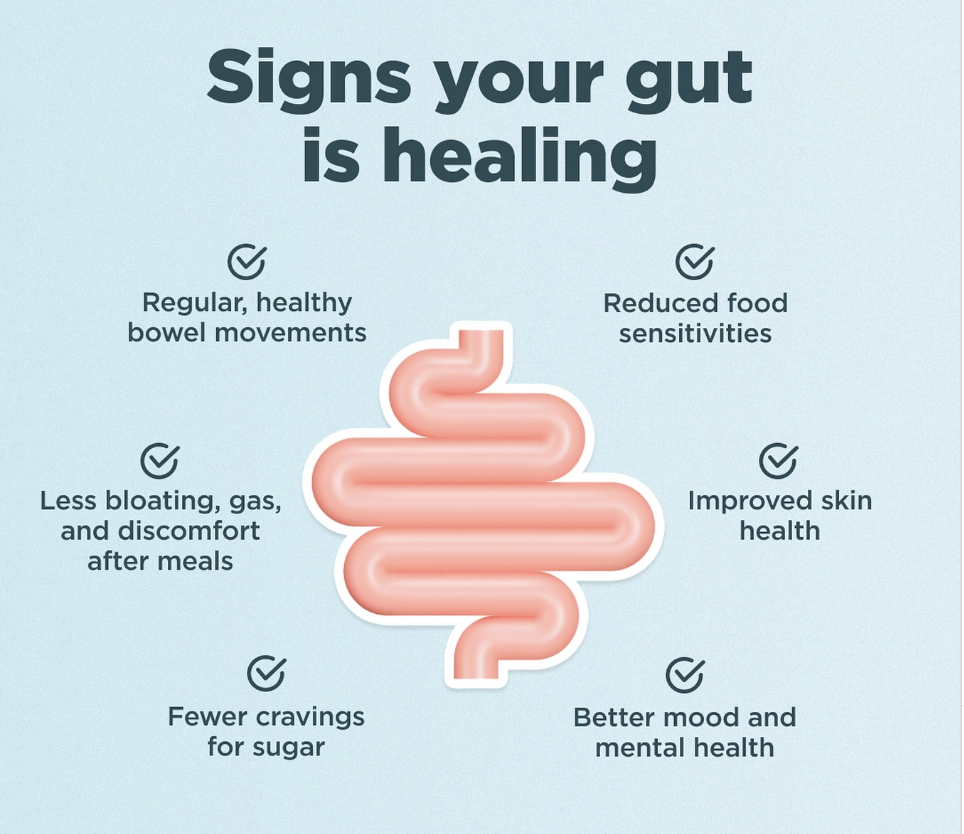
When your gut is happy and healthy, there will be signs. Your body is always communicating with you, giving you signs. Friend, pay attention.
1. Your Gut is Your Second Brain, Literally
This is not meant in the traditional sense, but more as a metaphor to emphasize the very real connection between your gastrointestinal tract and your central nervous system. Your GI tract has its own nervous system, the enteric nervous system; that can operate independently of the brain.
This “second brain” constantly communicates with your central nervous system through the vagus nerve, influencing:
Mood (about 90% of serotonin is made in your gut!)
Sleep & Stress (contributes to the circadian rhythm of cortisol)
Hormone balance via processing and eliminating excess estrogen
The vagus nerve is still widely discussed and for good reason. It’s also known as the ‘rest and digest’ nerve because it can activate the parasympathetic nervous system which promotes a state of calm in the body and is essential for digestive function.
Naturally support your mood, sleep, stress response and hormones by prioritizing gut health and stimulating your vagus nerve: practice deep breathing with longer exhale, humming or singing, engage in mind-body practices like yoga or mediation.
2. Gut Motility Matters
Your GI tract is a long, continuous tube that your food travels through after eating. Food is ingested, gets broken down, nutrients are absorbed and wastes are eliminated. How this food moves through your GI tract is called gut motility and it’s everything.
When it slows down, hello bloating, constipation, and bacterial overgrowth. When it speeds up too much, say goodbye to nutrient absorption.
Factors affecting gut motility:
Intact Mucosal Lining - This thin yet powerful layer protects the walls of your intestines and supports the immune system. When it becomes weakened by stress, medications, or processed foods, your gut becomes more prone to inflammation and leaky gut.
Stomach Acid (HCL) - HCl is essential for breaking down protein, absorbing minerals, and signaling your digestive organs to get to work. Low stomach acid can lead to bloating, nutrient deficiencies, or a feeling of heaviness after meals.
Digestive Enzymes - These specialized proteins break down the foods you eat into smaller, absorbable pieces your body can actually use for energy, repair, and hormone balance. Your saliva has digestive enzymes in it and your pancreas, gallbladder and liver release enzymes to help digestion.
Autonomic Nervous System - Your nervous system controls your muscles and since your GI tract is a long tube of muscle, a regulated nervous system is critical for smooth digestion.
3. The Gut Regenerates Every 3-5 Days
Here’s some encouraging news, your gut lining renews itself every 3 to 5 days.
That means your body is constantly working to heal and rebuild. With the right nourishment and environment, you can restore your gut health far more quickly than you might think.
Your body simply needs:
Adequate protein (for tissue repair)
Essential minerals (magnesium, zinc, sodium, potassium)
Hydration (to keep cells functioning properly)
Rest and recovery (because healing happens when you slow down)
Consistency in these small habits makes a profound difference over time.
4. More Fiber is Not Always Best
Too much fiber too quickly can actually worsen bloating, gas, and discomfort. The key is to increase it gradually and hydrate well. The type of fiber is also important, soluble vs insoluble. More importantly, if you’re dealing with overgrowth in your GI tract, remember fiber feeds good AND bad bacteria.
Your gut health affects how you show up in your daily life; your mood, confidence, focus, and energy. Yet most women only address it when there’s a problem. The more we normalize gut conversations, the sooner we can spot issues and support each other in healing.
xx
Dr. Toya D White