Digestive Enzymes 101
Okay ladies, let’s get real for a second. Have you ever felt like food just sits in your stomach for hours, making you feel heavy, bloated, and one French fry away from regret? Yeah, that’s your body crying out for a little enzymatic love. So many women quietly struggle with digestion that zaps their energy, messes with their mood, and makes them feel “off” in their own body. The truth? Sometimes it’s not the food itself, it’s what your body isn’t doing with it.
One overlooked tool that can make a world of difference: digestive enzymes.
But what are they really? Why do they matter? And how do you choose the right one without feeling like you need a PhD in biochemistry? Let’s break it all down in plain English, so you can support your gut in a way that feels good and actually works.
Truth bomb: You can eat the perfect diet, but if you’re not breaking it down properly, your cells never get the full benefit.
What Are Digestive Enzymes?
Think of enzymes as your gut’s behind-the-scenes girl squad. Their mission? Break down food into tiny nutrients your body can actually use. Without them, it’s like showing up to brunch with avocado toast… but no knife. Good luck enjoying that. Even the cleanest salad or green smoothie can leave you bloated, sluggish, and wondering why healthy eating doesn’t feel so healthy.
Why We Need Digestive Enzymes
Enzymes aren’t just “nice to have”, they’re essential. Here’s why your gut (and your whole body) loves them:
They help you absorb nutrients— this means energy, balanced hormones, and a more resilient immune system.
They can ease digestive drama like gas, bloating, and indigestion.
They give your pancreas and stomach a break, especially during stressful seasons or as we age.
Some women naturally produce fewer enzymes (thanks to stress, inflammation, medications, or just life). That’s where food sources or supplements can step in as allies, not band-aids, but gentle support.
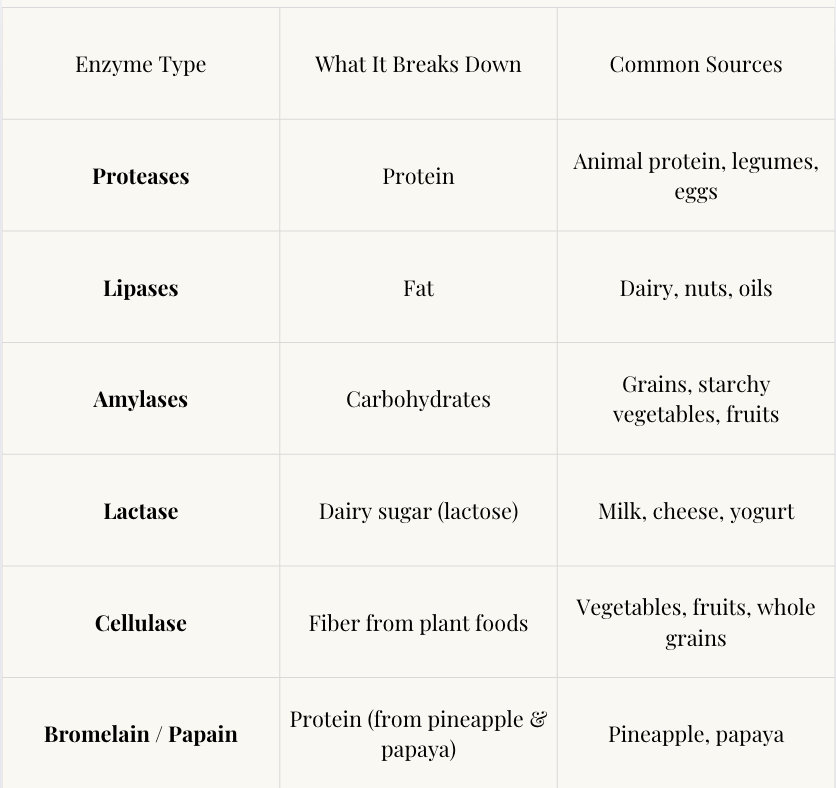
Different Types of Digestive Enzymes
Make it stand out
Whatever it is, the way you tell your story online can make all the difference.
Food Enzymes vs. Supplements
Here’s the empowering part: you can get enzymes from food and supplements.
Food sources – Pineapple, papaya, kiwi, and fermented foods = nature’s enzyme boosters.
Supplements – Sometimes your system needs backup. The key is picking one that survives your stomach acid and matches your diet.
Think of supplements as your gut’s personal trainer,helpful, but not a replacement for the real work your body is designed to do.
Choosing the Right Digestive Enzyme
Here’s how to cut through the overwhelm:
Match it to your diet:
High-protein → look for protease + lipase
Dairy struggles → lactase
Plant-heavy → amylase + cellulase
Check pH survival: Your stomach is acidic (pH 1–3). Look for enteric-coated or acid-resistant blends so they don’t quit before they start.
Plant vs. Animal Based:
Plant-based enzymes (from papaya, pineapple, or fungi) → broad spectrum, work in a wider pH range, great for most women.
Animal-based enzymes → potent for protein/fat digestion, but many deactivate in stomach acid.
Practical Tips for Using Digestive Enzymes
Take them before or during meals (not hours later).
Start broad-spectrum if you’re unsure where your weak spot is.
Pair them with simple gut-loving habits: hydration, mindful eating, and a quick post-meal walk.
Track your results, your body will tell you what works.
Digestive enzymes are powerful allies for women looking to improve gut health, nutrient absorption, and overall vitality. From food sources like pineapple, papaya, and fermented veggies to high-quality supplements—knowing your options helps you make informed, gentle choices for your digestive system.
Action Steps:
Add one enzyme-rich food to your meals this week (think pineapple salsa or papaya smoothie).
If you’re still dealing with heaviness or bloat, try a broad-spectrum vegetarian enzyme supplement and notice how you feel.
Download my Digestive Enzyme Quick Guide for a cheat sheet on the right enzymes for your meals.
xx
Dr. Toya D White